

Monaco and Saint-Tropez are the two poles of the French Riviera, geographically 115 kilometres apart, philosophically further. Both attract the same client profile: ultra-high-net-worth individuals, yacht owners, European royalty, global business principals. Both command the same price register. The comparison, however, reveals two entirely different relationships with luxury. FFGR Monaco operates ground transport in both destinations and observes this distinction daily. This guide is not a ranking. It is an analysis, the kind that helps our clients make itinerary decisions rather than aesthetic ones.
The Nature of Each Place
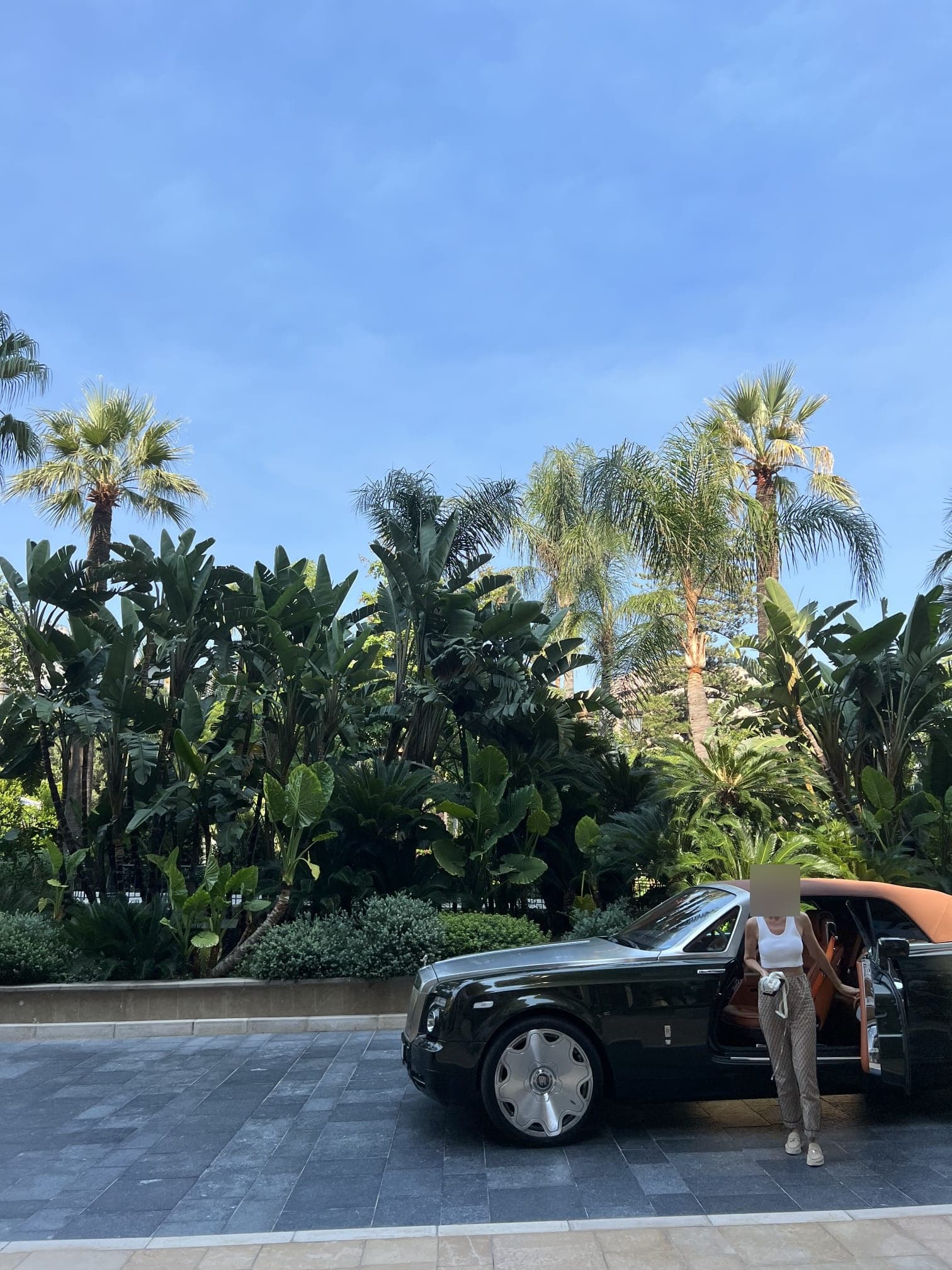
Monaco is a sovereign state of 2.02 square kilometres. Its density, 40,000 residents in an area smaller than Central Park, creates a specific kind of intensity. Everything is compressed: the casino, the port, the Palace, the Grand Prix circuit, the luxury retail, the private banking. This compression is the point. Monaco rewards proximity; everything that matters is within walking distance of everything else. The Rolls-Royce at the Hôtel de Paris is parked adjacent to the Casino Square within 30 seconds.
Saint-Tropez is the opposite: expansive, distributed, and seasonal. The village itself is ancient and intimate, but the experience extends outwards, to Pampelonne beach 4 kilometres south, to the vineyards of Domaine Tropez, to the hilltop villages of Gassin and Ramatuelle. Saint-Tropez rewards scale; the longer and more widely you explore it, the better it reveals itself.
The Calendars
Monaco operates year-round at roughly the same intensity. The Grand Prix in May, the Yacht Show in September, the Formula E in April, the Masters in April, and the Rallye Monte-Carlo in January all generate concentrated demand, but between them, Monaco remains a functioning, populated, fully-operational luxury destination. The Hôtel de Paris is never empty. The casino closes only for maintenance. The port is busy in December.
Saint-Tropez is summer. The window from June 20th to September 10th is the only period when the destination operates at full capacity, and the intensity of that window is extreme. Outside it, Saint-Tropez retreats to a pace that its regulars describe either as peaceful or as off-season depending on preference. If you are visiting for the first time, do not visit Saint-Tropez in February.
Yachting
Monaco's Port Hercule and Port de Fontvieille are the two principal mooring points. The Yacht Club de Monaco oversees Port Hercule and sets the tone for the entire marina: formal, institutional, the kind of environment where the tender is as important as the yacht. Berths are controlled, allocated, and difficult to obtain without advance relationship.
Saint-Tropez's Vieux Port is the yacht anchorage of European summer mythology. The quai Jean Jaurès is the most photographed marina on the Mediterranean. Berths here are equally difficult, but the atmosphere is the opposite of Monaco: informal, performative, visible. Being seen at the Vieux Port is part of the itinerary in a way that being seen at Port Hercule is not.
Ground Transport: The FFGR Monaco Perspective
From a ground transport perspective, Monaco and Saint-Tropez require completely different operational approaches. Monaco is contained: every significant address is within 3 kilometres. Our Monaco operations focus on timing, access protocol, and vehicle presentation, the distance is never the challenge.
Saint-Tropez is geography: the challenge is always the D98, the peninsula access, the seasonal congestion, and the judgment calls that separate a good arrival from a bad one. Our Saint-Tropez operations require local road intelligence, advance traffic monitoring, and timing decisions that a navigation app cannot make. This is why the same driver who is appropriate for a Monaco circuit, protocol-focused, formal, French-speaking, is not necessarily the optimal driver for a Saint-Tropez circuit, where flexibility, local knowledge, and a sense of the peninsula's rhythms are the critical competencies.
The Itinerary Recommendation
For a first Riviera visit, Monaco and Saint-Tropez are better experienced as complementary rather than competing destinations. The sequence we recommend most frequently: arrive at Nice Airport, spend three nights in Monaco (Grand Prix season, Yacht Show, or a Masters weekend for specific events; any time year-round for the destination itself), then transfer to Saint-Tropez for three to five nights via FFGR Monaco, either by road (1h45-2h30 depending on season) or by Monaco helicopter to Saint-Tropez helipad (35 minutes).
This combination captures the two distinct Riviera experiences: Monaco's urban intensity and Saint-Tropez's open-air scale. FFGR Monaco manages both legs as a single operational brief, with the same driver where the schedule permits, and the same WhatsApp contact throughout.