
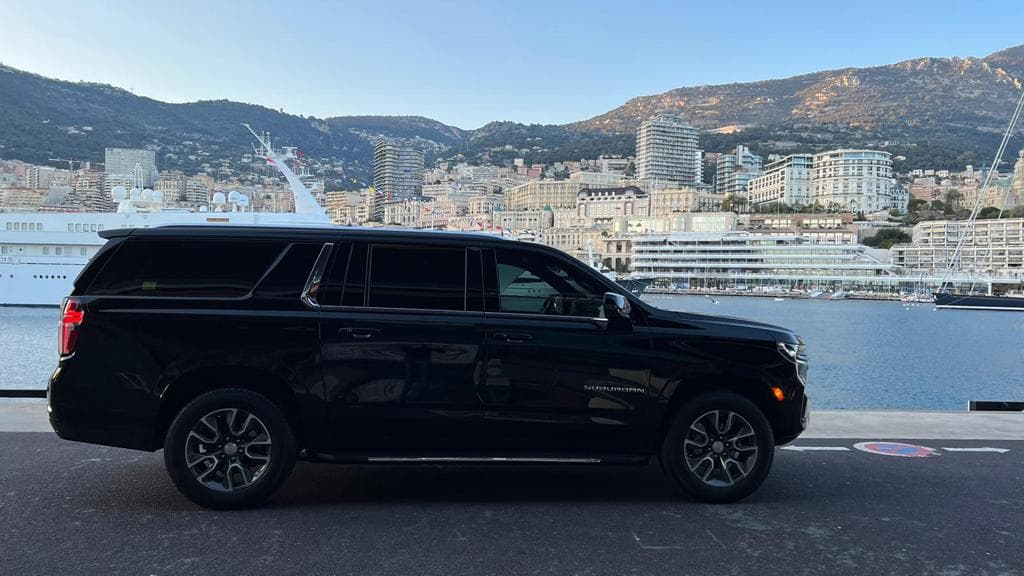
The Monaco Grand Prix is the most watched, most socially dense, and most logistically complex single-weekend event on the European luxury calendar. For three days in late May, the Principality's 2 km² becomes a controlled access zone where the wrong car, the wrong route, or the wrong timing can cost a guest hours of their weekend. This guide explains, from the perspective of a ground operator who works every Grand Prix, exactly what it takes to move VIP guests seamlessly through the Principality when the circuit is live.
Understanding the Road Closure Map
The Formula 1 circuit uses 3.3 km of public roads: nearly the entire coastal perimeter of Monaco. From Thursday morning through Sunday night, the roads forming the circuit (Boulevard Albert I, Avenue d'Ostende, the tunnel under Fairmont, Rascasse, the pit straight along Avenue Charles III) are entirely closed to traffic. The remaining road network: primarily the upper districts of La Rousse, Larvotto, and the A8 motorway entry at La Turbie: must absorb all non-circuit movement.
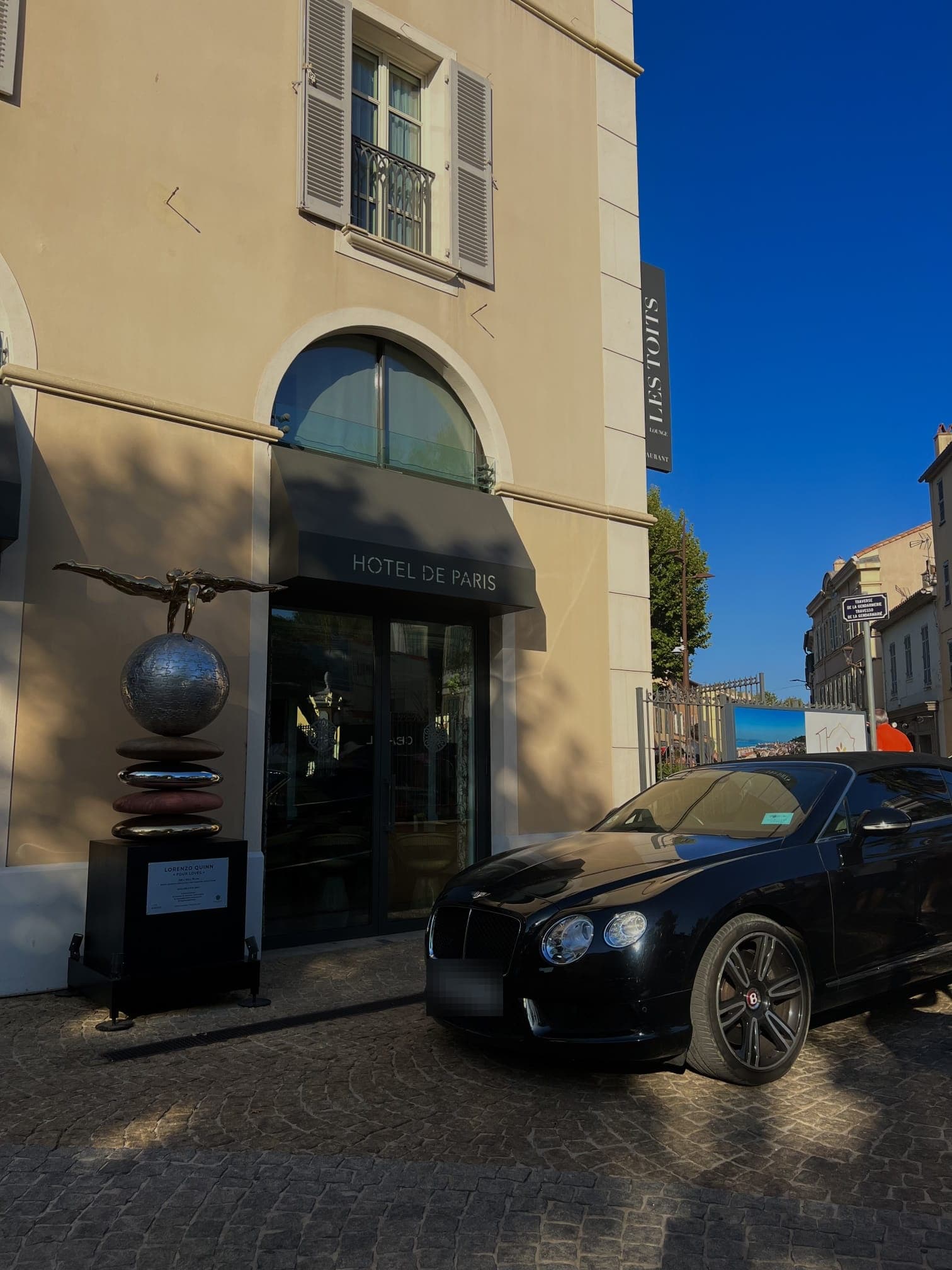
What this means in practice: a journey from the heliport to the Hôtel de Paris that takes seven minutes on a normal Tuesday takes 40 minutes on race day if the driver does not know the exact permitted routing through the upper boulevard network. We circulate a detailed access brief to all Grand Prix clients on the Tuesday before race week.
Helicopter vs. Ground | The Real Calculus
Many Grand Prix guests assume helicopters solve everything. In reality, helicopter capacity is constrained: the Monaco Héliair terminal handles a finite number of movements per hour, and the primary slots are booked 4-6 months in advance by returning VIP clients. If your helicopter slot lands at peak arrival time, Thursday afternoon or Friday morning, the ground transfer from the heliport to the Rock or Monte-Carlo can still take 25 minutes during peak pedestrian movement.
Ground transport during the Grand Prix is not slower than helicopter for all journeys. For arrivals from Cannes, Nice coastal road, or the Italian border, a well-routed car via the A8/A500 motorway approach can outperform a helicopter-ground combination on actual door-to-door time. We advise clients on this calculus for each specific itinerary.
Yacht-to-Venue Coordination
Approximately 40% of our Grand Prix clients are yacht-based: aboard their own vessel or chartering for race week in Port Hercule. For these clients, the primary mobility challenge is not entering Monaco but moving between the yacht and the grandstands, hospitality suites, and private functions ashore without being caught in pedestrian crowd surges.
We coordinate tender-to-quay arrivals with the Port Hercule harbour master, position vehicles at the precise access points authorised for NCC operators, and manage the timing between ashore functions so that the yacht-based client never waits more than three minutes for vehicle collection. This requires real-time radio contact between the tender crew, our driver, and the client's personal assistant.
The Accommodation Problem
The Hôtel de Paris, Hôtel Hermitage, and Monte-Carlo Bay all operate on waitlist protocols for Grand Prix dates: accessible only to clients with multi-year loyalty or formal corporate arrangements. For clients who have not secured Monaco accommodation, we regularly advise Cannes (45 minutes by private car via the motorway) as the most practical base, with a standing vehicle arrangement for race-day and social evening transfers.
Cap Ferrat, Èze-sur-Mer, and Nice's Promenade des Anglais hotels are secondary options. Menton and the Italian coast are viable only for clients whose schedule does not require same-day multiple circuit-entry trips.
Social Calendar Logistics | Dinners, Private Events, After-Parties
The Grand Prix social calendar is as complex as the sporting schedule. Thursday evening typically sees a cluster of brand hospitality dinners in Monte-Carlo and Cap d'Ail. Friday evening brings the F1 team parties in Fontvieille and the early private functions at the Yacht Club de Monaco. Saturday, the most socially intense night, features six to eight concurrent private events in venues spread across the Principality and into Cannes and the Cap.
We operate a flexible rotation model during these evenings: two drivers per principal client, alternating collection and positioning so that the vehicle is never more than two minutes from the client's exit. We map all confirmed events on a secure shared calendar with the client's assistant and build the evening routing before 18:00.
Booking the Right Ground Partner for Grand Prix
Ground transport during the Monaco Grand Prix cannot be improvised. The operators who perform well during race week are those who have standing authorisations with the Principality's transport authority, multi-year relationships with hotel concierge teams, and pre-planned routing around every road closure scenario.
FFGR Monaco accepts Grand Prix engagements from October of the preceding year. Returning clients hold priority for their preferred driver and vehicle. New clients should contact us by January at the latest for race-week arrangements. WhatsApp is the fastest entry point; our Grand Prix coordination team responds within two hours during business hours year-round.
Secure Your Grand Prix Ground Plan